

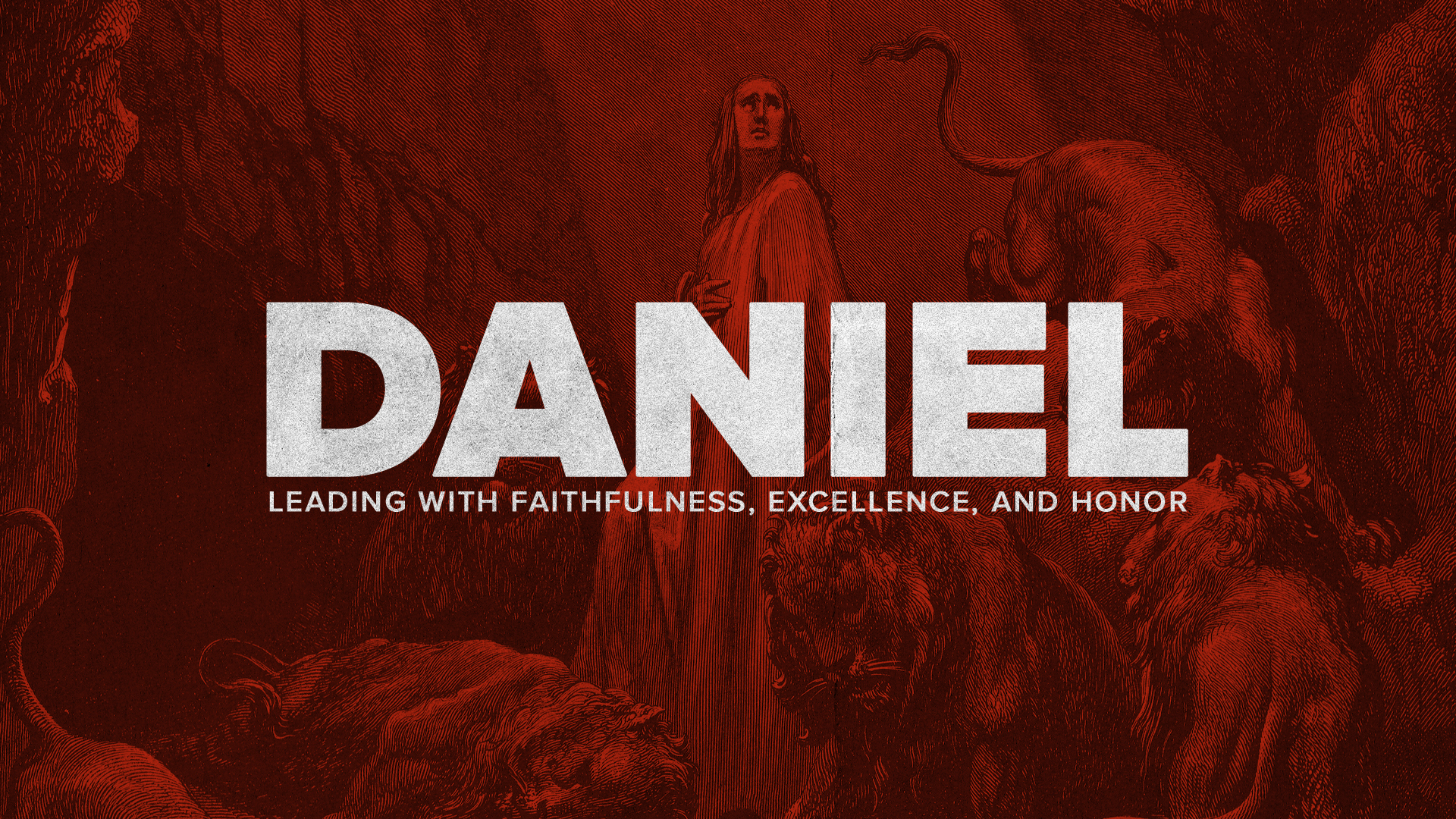
Daniel is one of my favorite biblical leaders because he shows us how to remain faithful to God when very little supports that decision. He was taken from his family and homeland into Babylon, educated in their ways, and given a different name. They tried to reshape his identity and allegiance. Yet Daniel remained devoted to Yahweh and became someone kings trusted. I appreciate that he could serve people he disagreed with and bring value to their kingdom while keeping his devotion to God intact.
Early in his story, Daniel resolved not to defile himself with the royal food and wine (Daniel 1:8). That decision established how he would live in Babylon. He learned their language and literature, but he had boundaries concerning what he would accept. They could give him a new name, but he still knew who he belonged to. In teaching this passage, I have emphasized that we can influence the culture without allowing its systems to determine our values. Daniel understood the world he lived in while remaining established in his faith. That matters for leaders because we will not always get to choose an environment that agrees with us.
I also appreciate his approach to the official responsible for him. Daniel asked permission and suggested a ten-day test. The official was afraid that allowing a different diet would put his own life at risk, and Daniel took that concern seriously (Daniel 1:8–14). He helped find a way forward. There is wisdom in that posture. Sometimes we have truth, but the way we carry it makes people unwilling to listen. Daniel approached this man with humility and graciousness. His conviction was settled, and he could communicate it respectfully. God gave him favor with the official, and Daniel handled that relationship with care.
His work carried that same spirit. Daniel 6:3 tells us that he distinguished himself so much that the king planned to place him over the kingdom. Daniel brought something valuable to the work he was given. I describe excellence as a posture rather than perfection. It is our best in progress. We bring our best to bring out the best where we function. Daniel had responsibilities that affected the king’s interests, and he took care of them. I think that is an area where our leadership becomes very practical. Do we prepare? Can people rely on us? Do we take care of what belongs to someone else? Our devotion to God should affect how we answer those questions.
Daniel maintained that standard over time. When the other officials tried to find fault in his handling of government affairs, they could find no corruption or negligence (Daniel 6:4). They were looking for a reason to accuse him and came up empty. I often say, “Faithfulness is doing the right thing for a long time.” Daniel lived that way through changes in rulers and kingdoms. He continued doing his work well, even when the people above him did not share his beliefs. That kind of credibility takes time to develop. As a leader, I want people to trust my character as much as they appreciate my gifts.
Eventually, his enemies realized that his devotion to God was the only thing they could use against him. Daniel’s faithfulness was predictable. They knew that if prayer became illegal, he would continue praying. After the decree was signed, Daniel went home and prayed three times a day, just as he had done before (Daniel 6:10). That detail says a great deal about him. Prayer was already part of his life. He had spent years depending on God, and he continued depending on Him when the consequences became dangerous. His daily devotion had prepared him for this moment.
The threat of the lions was real, and Daniel knew what continuing to pray could cost him. His obedience carried more weight than his self-preservation. One question I have asked in preaching is whether we are willing to obey God when the only foreseeable reward is obedience. Daniel’s decision brings that question into focus. He could control his response to the decree, but he had to trust God with what followed. Faithfulness takes courage, especially when doing the right thing could cost us something we want to keep.
When Darius returned to the den, Daniel still addressed him with honor. He explained that God had shut the lions’ mouths and that he had done no wrong against the king (Daniel 6:21–22). After everything that had happened, Daniel remained respectful. That is one of the strongest parts of his example to me. His honor had depth because it remained present under pressure. He could refuse a command that violated his devotion to God and still recognize the king’s position. His conviction and his graciousness belonged together.
The spiritual implication I see in Daniel’s life is that faithfulness to God reaches into everything we are entrusted with. It affects our work, our decisions, and how we treat people. Daniel served with excellence, maintained his prayer life, and honored rulers while keeping his allegiance to Yahweh. His influence gave those rulers opportunities to recognize the living God. That is the kind of leadership I want to practice: doing the right thing for a long time and trusting God to use that faithfulness wherever He places me.